
Every morning across the UK, thousands of commuters face the exact same quiet dilemma in front of the mirror: do I want to look sharp, or do I want my back to survive the day?
For years, the unspoken rule was simple. Totes and briefcases belonged in offices; backpacks belonged in lecture halls or on hiking trails. If you showed up to an important corporate pitch wearing a rucksack, people wondered where your tent was pitched.
Things have changed, but the choice is still surprisingly tricky. Between hybrid working schedules, carrying bulky tech, and battling crowded trains, choosing between a work tote vs backpack comes down to how you actually move through your day.
Let’s break down the pros, cons, and commute realities of each option so you can decide which one deserves a permanent spot on your shoulder.
There is an effortless elegance to a structured leather tote that a backpack just can’t quite match.
The Case for the Classic Work Tote
When you swing a structured leather tote onto a boardroom table, it sits upright. It feels intentional, polished, and immediately grown-up. Accessing your stuff is seamless, too — need your pass to get through a security barrier? You just dip your hand in without taking the bag off.
The Advantages
- Instant Sophistication: Matches tailored coats, blazers, and dresses without bunching up fabric around your shoulders.
- Easy Access: You can grab a notebook, pen, or your phone while still walking.
- Day-to-Dinner Ready: A sleek leather tote transitions effortlessly into after-work dinners or drinks without looking like gym gear.
The Downside
Physics is not on your side. Carrying a heavy laptop, a charger, and a reusable water bottle entirely on one side of your body puts continuous strain on a single shoulder and your trap muscles.
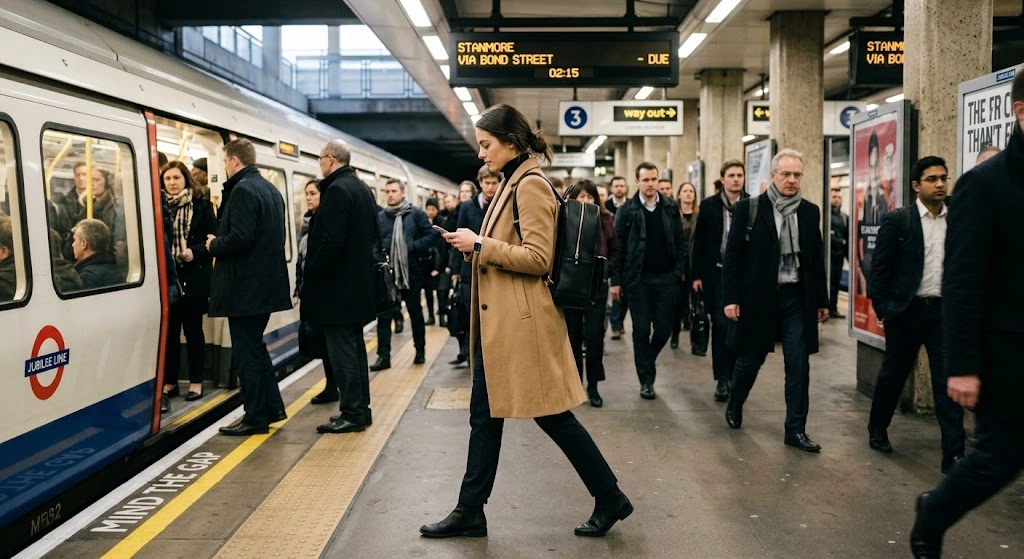
The Rise of the Smart Commuter Backpack
The modern professional backpack looks nothing like the bulky polyester bags we carried as teenagers. Today’s designs feature clean lines, understated matte hardware, and premium leather finishes.
A smart backpack treats your body with respect. By centering the weight right between your shoulder blades, walking 20 minutes from the station feels like a breeze instead of an endurance test.
The Advantages
- Hands-Free Freedom: Both hands stay completely free for coffee, checking train times, or holding subway handrails.
- Balanced Weight: Drastically cuts down on chronic shoulder and neck fatigue.
- Better Capacity Management: Dedicated compartments usually mean your cables, documents, and lunch aren’t piled on top of each other.
The Downside
They can be a nightmare in crowded rush-hour carriages if you don’t take them off. Plus, backpacks can wrinkle the shoulders of tailored wool coats and silk shirts over time.
If transit safety is high on your priority list, make sure whatever style you choose features secure fastenings. Our guide to commuter-friendly bags with top zips and security walks through what to look for when navigating busy stations.

The Spine Factor: Ergonomics and Weight Distribution
Let’s be honest about the numbers. A typical 14-inch work laptop weighs around 1.4 kg. Add a charger brick, a travel mug, personal essentials, and the weight of the bag itself, and you’re routinely hauling 3.5 to 5 kg.
When you carry that weight on one shoulder with a tote:
- Your shoulder automatically hikes up slightly to stop the straps from sliding down.
- Your spine curves sideways to compensate for the uneven load.
- Over months, this creates uneven tightness through your upper back, neck, and lower lumbar area.
If you already struggle with back ache or have a long walking leg on your daily route, an ergonomic leather backpack is hands down the healthier tool for the job.
If you still prefer a tote, consider alternating shoulders regularly or check out our roundup of the best women’s laptop bags for designs with wide, cushioned handles that distribute pressure better.
Commute Scenarios: Which Bag Wins Where?
Your commute style will almost always decide this debate for you. Here’s a quick breakdown:
| Commute Type | Winner | Why |
|---|---|---|
| Train & Tube | Tie | A backpack is easier on the stairs, but an open tote is vulnerable to pickpockets. A zip-top tote or a slim backpack held by its grab handle both work well. |
| Walking or Cycling | Backpack | Riding a bicycle or walking more than a mile with a heavy tote swinging against your hip gets frustrating within five minutes. |
| Car Commute | Tote | If your commute is just walking from the front door to the car and from the car park to your desk, you get all the style points without hauling heavy weight over distance. |
For a broader look at how different work bags fit across industries and roles, head over to The Ultimate Guide to Professional Work Bags.
How to Style Both Without Looking Untidy
If You Choose a Backpack
Keep it minimalist. Avoid external bungee cords, loud logos, or oversized mesh bottle holders. Stick to rich dark brown or black leather that looks intentional alongside smart-casual workwear.
If You Choose a Tote
Make sure it has structure. A slouchy bag filled with heavy items will sag and bulge awkwardly. Look for a flat, reinforced base with protective metal feet so it stays upright when you set it down.
Frequently Asked Questions
Is wearing a backpack to an office job unprofessional?
Not in 2026. In most corporate and creative offices, a minimalist, high-quality leather backpack is widely accepted. As long as it has clean lines and looks tidy rather than athletic, it fits right in with modern smart-casual dress codes.
Will carrying a heavy work tote cause long-term posture problems?
Carrying a heavy load on one shoulder repeatedly can cause muscle imbalances, tight neck muscles, and chronic shoulder fatigue. If your bag consistently weighs over 3 to 4 kg, switching shoulders periodically or alternating with a backpack can help prevent strain.
What is the safest bag style for public transport?
A zip-top tote kept tucked under your arm or a backpack with hidden, body-facing pockets offers the best protection against pickpockets during crowded rush-hour commutes.
Can I wear a backpack over a tailored blazer or coat?
Yes, but be mindful of the fabric. Heavy friction from tight backpack straps can cause pilling or wear down the shoulders of fine wool coats, linen jackets, and delicate silks over time. Loosening the straps slightly or carrying the backpack by its top handle when wearing delicate fabrics helps prevent wear.